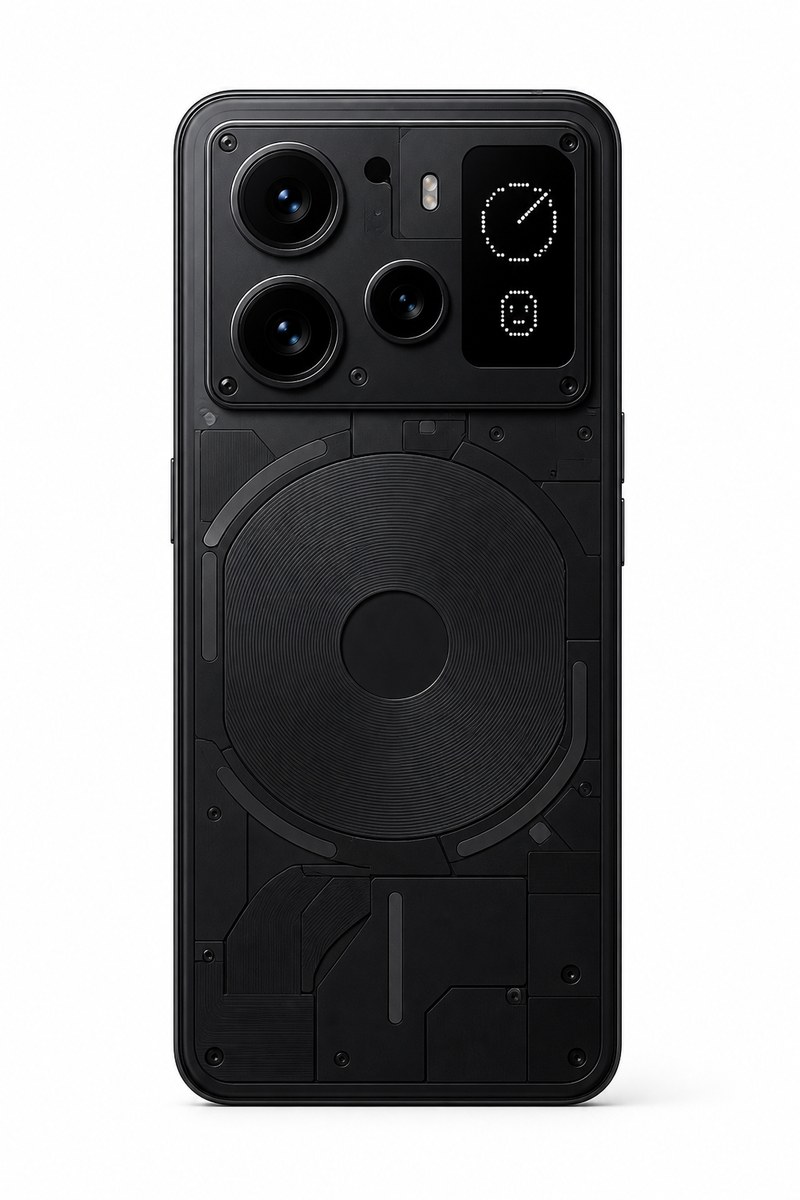
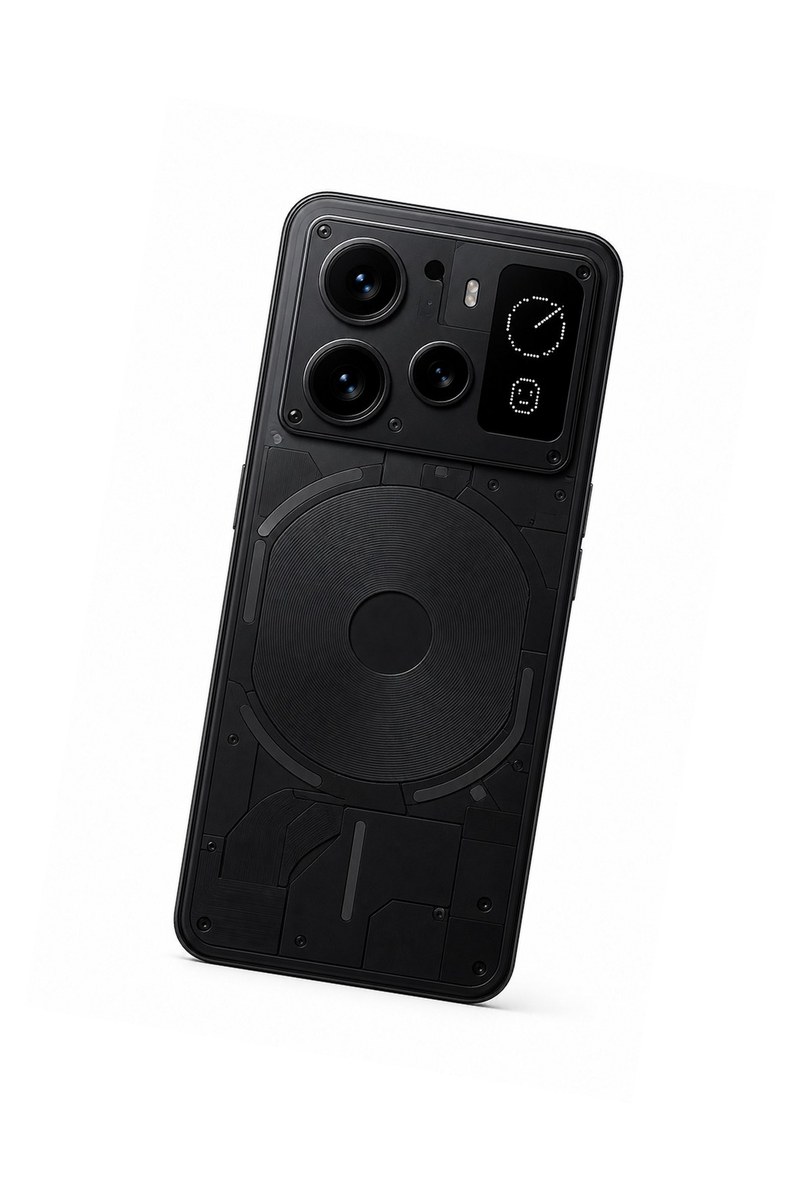
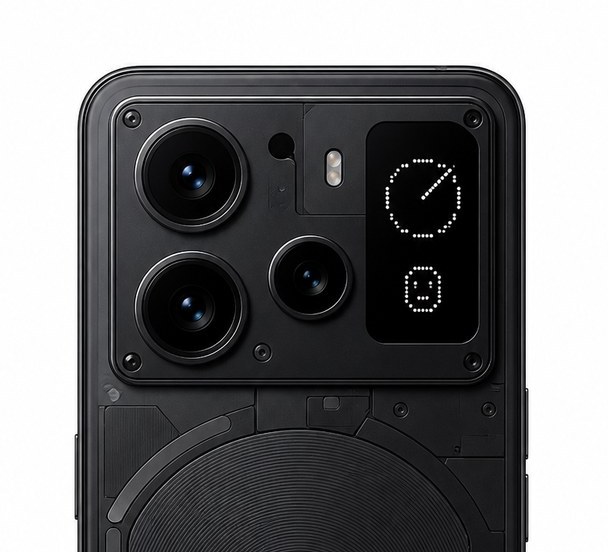
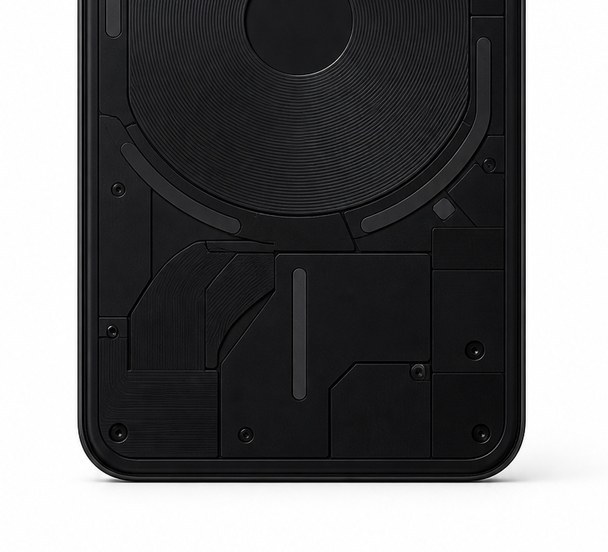
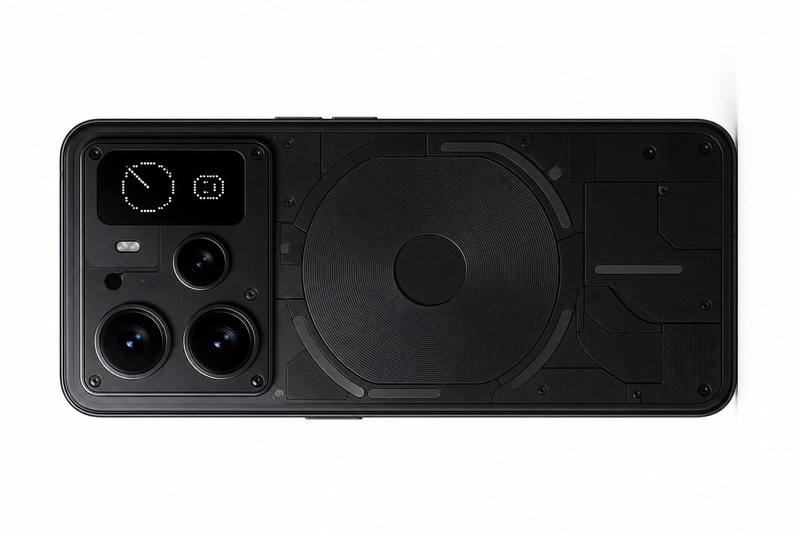
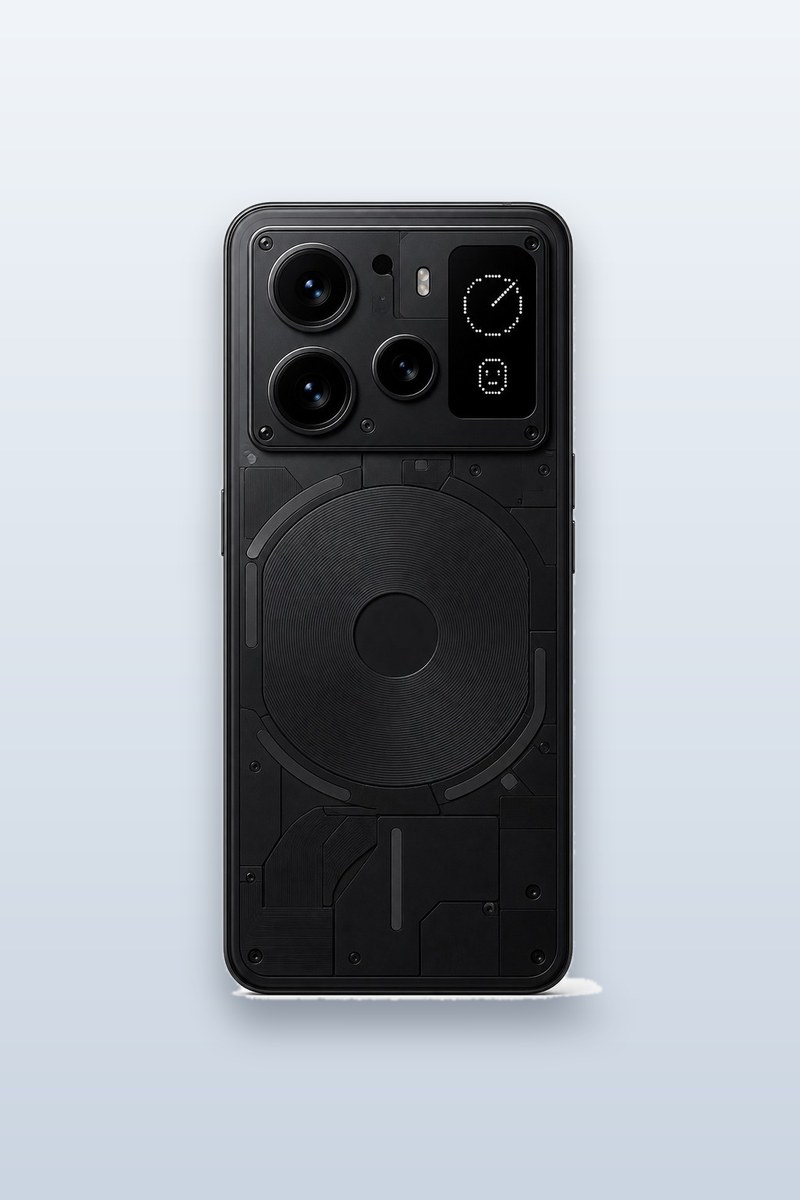
Illustrative images for identification. Not official manufacturer store photos. AllMobileSpecs is not affiliated with Nothing.
Phone (3)
$799.00
Indicative USD (or converted display amount). Not a sale price and not an offer to buy.
Nothing's Glyph-interface flagship.
Overview
Nothing Phone (3) continues the company’s design-led approach to Android, running Nothing OS 3.5. The sheet we publish lists a 6.7-inch LTPO OLED, the Snapdragon 8s Gen 4, 12 GB of RAM, and a triple 50 MP camera. A 5150 mAh battery with 65 W wired and 15 W wireless charging sits in the mid-to-fast range — slower than the OnePlus 13, considerably faster than any Pixel.
The chipset choice is the most important line on this table and the easiest to skim past. The Snapdragon 8s Gen 4 is Qualcomm's second-tier flagship part, not the 8 Elite that the Samsung, Xiaomi, OnePlus, and Motorola flagships in our catalog use. It is a genuinely fast chip and nobody will find it slow in normal use, but it is a step below the top of the range, and that is a deliberate positioning decision rather than an oversight. Nothing is not trying to win specification comparisons.
What it is trying to win is recognition. Semi-transparent construction, a dot-matrix design language, and the Glyph interface — rear lighting that signals calls, notifications, timers, and charging progress — make these phones identifiable across a table, which no other Android manufacturer can currently claim. Whether that is worth money is a genuine question rather than a rhetorical one, and it is the actual decision this phone asks you to make.
Nothing OS is the other half of the appeal and the part that tends to convert people. It stays close to stock Android, applies a consistent monochrome visual theme, and ships with unusually little preinstalled software. Among Android builds from non-Google manufacturers it is one of the cleanest available. The caveat is longevity: Nothing publishes update commitments per model and they have improved each generation, but they do not match Google's or Samsung's flagship policies, and Nothing is a small company by industry standards.
USB-C at 2.0 speeds on some units is the other specification worth reading carefully. For charging it makes no difference. For moving large amounts of video off the phone by cable it is several times slower than the USB 3.x ports on most flagships. We list what was announced for the configuration we catalogued.
The triple 50 MP rear camera follows the evenly-matched-sensor approach, which helps ultrawide and zoom shots stay consistent with the main camera, and the 50 MP selfie camera is high-resolution for the class. IP68 and a 201 g weight are both reasonable for the size.
This is not a Nothing store. We are not affiliated with Nothing, pricing is indicative USD only, and the image is illustrative.
Who it is for
For readers who want a phone that looks like nothing else on the table and runs one of the cleanest Android builds available outside a Pixel. If you have been irritated by preinstalled software and heavy manufacturer skins, Nothing OS is a direct answer to that, and the price sits below the true flagships while the everyday experience does not feel like a compromise.
Not for buyers who need USB 3 transfer speeds — offloading video by cable is several times slower here than on a flagship — or absolute peak performance, since the 8s Gen 4 is a tier below the 8 Elite that rivals at higher prices use. Not for people who want a small phone; 6.7 inches is mainstream-large. And if you expect to keep a phone for five or six years, the longer published support commitments from Google and Samsung are a reasonable argument against a smaller manufacturer.
How it compares
Against the OnePlus 13, the OnePlus is straightforwardly the stronger hardware: better chipset, bigger battery, much faster charging, higher-resolution screen. Nothing's answer is price, design, and a cleaner software build. If you are buying on specification alone, this is not a close comparison.
Against the Pixel 9 Pro, the two are closer than the price gap suggests. Nothing charges considerably faster — 65 W against 27 W — and costs less. The Pixel has the better camera processing, a longer support commitment, and a much more compact body.
Against the Galaxy S25 Ultra, this is a different price class entirely and is not meant to compete on hardware. The question is whether the Ultra's extra camera and stylus are worth the difference to you.
Specifications
Hardware as typically announced. Blank fields mean we have not entered a figure — we do not invent specs.
| Technology | GSM / HSPA / LTE / 5G |
|---|
| Announced | 2025, July |
|---|---|
| Status | Available |
| Dimensions | 160.0 x 75.5 x 8.1 mm |
|---|---|
| Weight | 201 g |
| SIM | Dual Nano-SIM + eSIM |
| IP rating | IP68 |
| Colors | Black, White |
| Type | LTPO OLED, 120Hz |
|---|---|
| Size | 6.7 inches |
| Resolution | 1264 x 2744 pixels |
| Protection | Gorilla Glass 7i |
| OS | Android 15, Nothing OS 3.5 |
|---|---|
| Chipset | Qualcomm Snapdragon 8s Gen 4 |
| CPU | Octa-core |
| GPU | Adreno 825 |
| RAM | 12 GB |
|---|---|
| Storage | 256 GB / 512 GB |
| Card slot | No |
| Main | 50 MP (wide) + 50 MP (telephoto) + 50 MP (ultrawide) |
|---|---|
| Selfie | 50 MP |
| Loudspeaker | Yes, stereo speakers |
|---|---|
| 3.5mm jack | No |
| WLAN | Wi-Fi 6 |
|---|---|
| Bluetooth | 5.4 |
| NFC | Yes |
| USB | USB Type-C 2.0 |
| Capacity | 5150 mAh |
|---|---|
| Charging | 65W wired, 15W wireless |
| Sensors | Fingerprint (under display), accelerometer, gyro, proximity, compass |
|---|